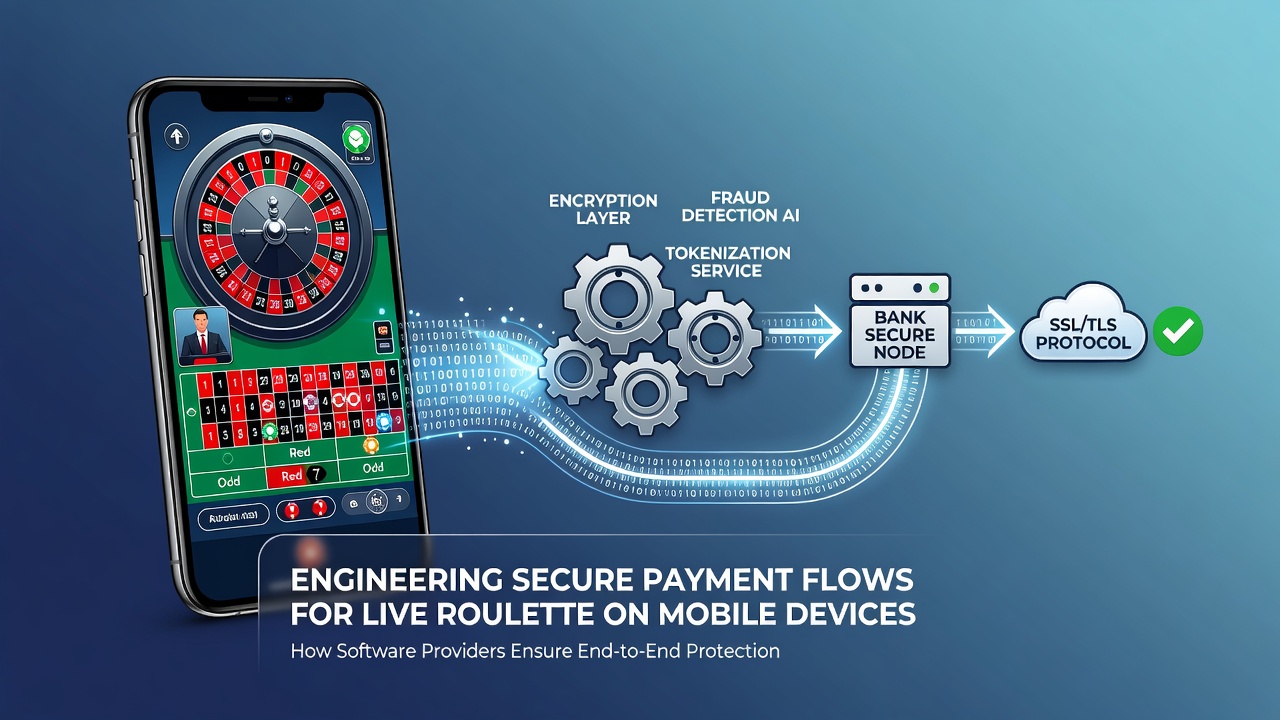
Engineering Secure Payment Flows for Live Roulette on Mobile Devices
Software providers build payment flows for live roulette on mobile devices around layered security that addresses data transmission risks, device vulnerabilities, and regulatory requirements at every step. These systems handle real-time bets during ongoing games, so interruptions or breaches can affect both player funds and game integrity. Providers integrate encryption standards, tokenization, and continuous monitoring to maintain secure transactions while supporting the fast pace of live dealer interactions.
Core Encryption and Tokenization Methods
Encryption forms the foundation, with providers applying TLS 1.3 protocols to protect data moving between mobile apps and backend servers, while AES-256 secures stored information. Tokenization replaces actual payment credentials with unique tokens that carry no usable value outside the specific transaction environment, reducing exposure if a device is compromised. Researchers at institutions like those publishing through the National Institute of Standards and Technology have documented how these combined techniques limit the impact of intercepted mobile traffic in high-volume gaming scenarios.
Payment gateways connect through secure APIs that enforce mutual authentication between the app and the processing server, preventing unauthorized calls during a live roulette session. Software teams test these connections under simulated network conditions to verify that latency stays low enough for uninterrupted betting, even as encryption overhead processes each wager.
Mobile-Specific Security Implementations
Mobile environments introduce variables such as varying operating system versions, network handoffs between Wi-Fi and cellular, and background app activity that can affect security posture. Providers address these by embedding device attestation checks that confirm the phone has not been rooted or jailbroken before allowing a payment to proceed. Biometric authentication through fingerprint or facial recognition ties directly into the payment flow, requiring user verification for each deposit or withdrawal tied to an active roulette table.
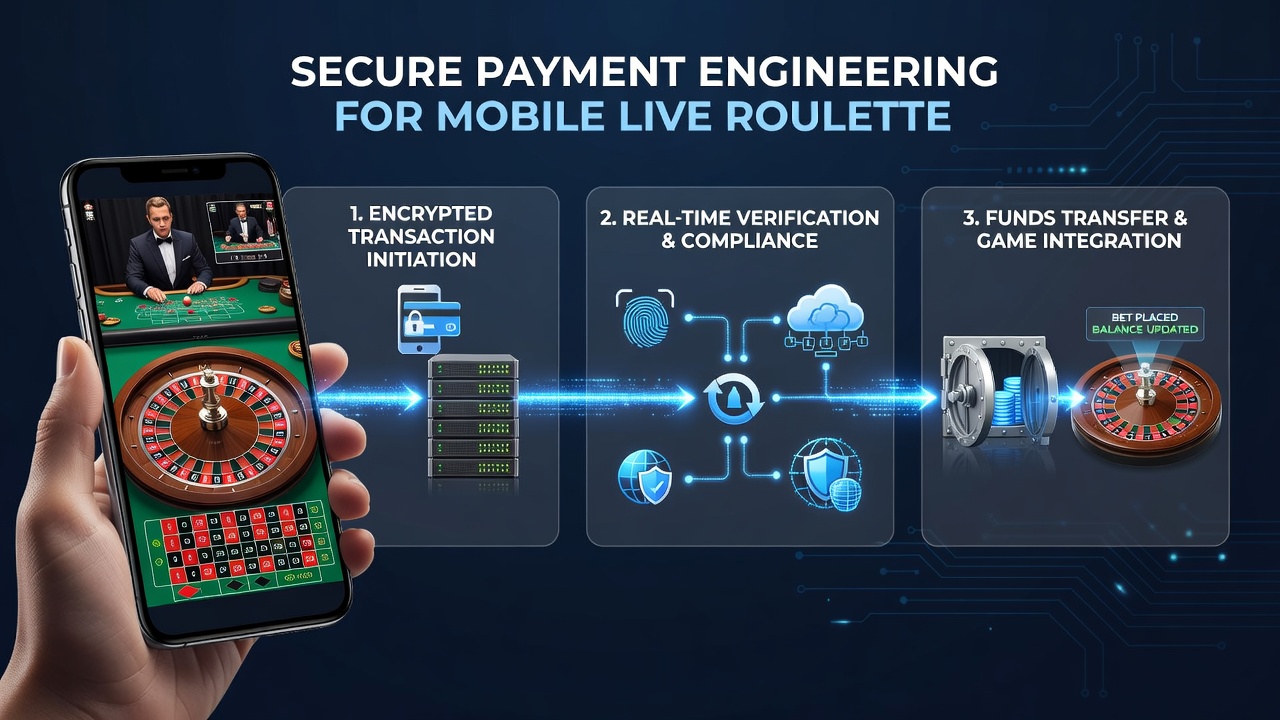
Session management tracks the entire payment sequence from initiation to confirmation, logging timestamps and device identifiers without storing full card details. When a player places a bet mid-round, the system generates a one-time authorization code that expires quickly if the connection drops or the app moves to the background. This approach keeps the payment aligned with the live game state while blocking replay attempts.
Regulatory Compliance and Monitoring Frameworks
Compliance requirements shape the architecture, with providers mapping payment flows against standards from bodies such as those outlined by the PCI Security Standards Council for handling card data. Geographic variations appear in how different jurisdictions mandate audit trails and data residency, prompting providers to maintain region-specific configurations within the same core codebase. As of August 2026, several frameworks have incorporated updated guidance on real-time fraud signals for mobile gaming, requiring additional behavioral analytics layers.
Automated monitoring systems flag anomalies such as rapid successive transactions or location mismatches during a live roulette session, triggering temporary holds while human reviewers examine the activity. These tools draw on aggregated data patterns rather than individual profiles, allowing providers to respond to emerging threats without halting legitimate play. Integration with third-party risk scoring services adds another verification step before funds move to or from the player's account.
Testing and Continuous Improvement Processes
Software teams conduct penetration testing and code reviews at regular intervals, focusing on the payment module's interaction with live game servers. Simulated attacks replicate common mobile threats including man-in-the-middle attempts on public networks and malware that targets clipboard data during card entry. Findings from these exercises feed directly into updates that roll out through app stores, ensuring that security patches reach devices before new vulnerabilities become widespread.
Providers also analyze post-transaction data to refine detection rules, adjusting thresholds for what constitutes unusual activity in the context of mobile roulette betting patterns. This feedback loop supports ongoing adjustments without requiring full system overhauls.
Conclusion
Payment flow engineering for live roulette on mobile devices centers on coordinated use of encryption, tokenization, device checks, and regulatory alignment to protect transactions in real time. These measures operate together to support uninterrupted gameplay while meeting external standards that evolve over time. Continued refinement through testing and monitoring allows providers to address new device capabilities and threat vectors as they emerge.