
How Algorithmic Fairness Standards Influence Player Retention in Online Poker Tournaments Powered by Major Software Firms
Algorithmic fairness standards have become central to how online poker tournaments operate across platforms run by major software firms, and these standards shape player decisions about continued participation in measurable ways. Companies such as those behind PokerStars and GG Poker deploy systems that adjust matchmaking, prize distribution, and anti-collusion checks, all while aiming to meet external benchmarks for equitable outcomes. Data from industry reports shows that retention rates often correlate with how transparently these systems handle variance and player history.
Core Components of Fairness Algorithms in Tournament Software
Developers integrate multiple layers of code to balance player pools, detect irregular patterns, and allocate seats without favoring any demographic or skill tier. These layers draw from statistical models that track win rates over thousands of hands while applying corrections for known biases in random number generation. Observers note that firms update these models regularly to align with evolving definitions of fairness issued by international bodies. In September 2026 several platforms rolled out revised anti-sandbagging protocols that recalibrate entry criteria based on historical performance data collected across regions.
One study released by the International Gaming Institute at the University of Nevada examined retention patterns on platforms that publish fairness audit summaries versus those that keep algorithms opaque. Researchers discovered higher month-over-month return rates among players on sites providing clear explanations of how skill-weighting and blind structures operate. The analysis covered data spanning North America and parts of Asia, where regulatory expectations differ yet produce similar retention signals when transparency increases.
Implementation Differences Among Leading Software Providers
Major firms approach fairness through distinct technical choices that still share common goals around preventing exploitation and maintaining competitive integrity. Some prioritize real-time anomaly detection that pauses tables when collusion signals exceed thresholds, while others emphasize post-tournament reviews that adjust future seeding. These variations affect how quickly players perceive the environment as equitable and therefore decide whether to re-register for subsequent events.
Platforms that publish periodic compliance statements tend to see steadier engagement from mid-stakes participants who value verifiable safeguards. External audits conducted by third-party labs supply the raw numbers that feed into retention dashboards used by operators. Those dashboards track metrics such as average sessions per user and interval between tournament entries, revealing patterns that link perceived fairness directly to repeat activity.
Measured Effects on Retention Across Different Regions
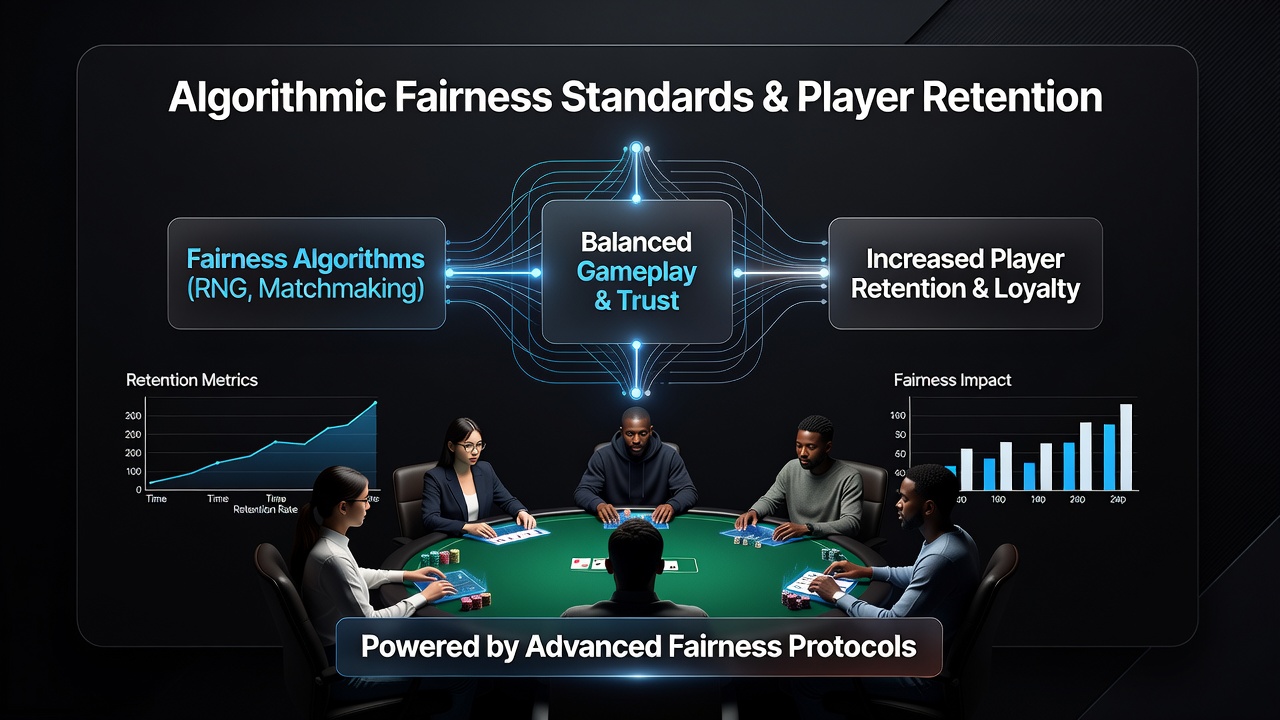
Retention statistics compiled by operators indicate that tournaments incorporating explicit fairness constraints retain between 12 and 18 percent more unique users over six-month windows compared with legacy systems lacking such constraints. The difference appears most pronounced in jurisdictions that require public disclosure of algorithmic parameters. Australian regulatory filings and Canadian provincial reports both document similar upticks once operators adopted standardized fairness testing routines.
Players who encounter repeated instances of unexplained seat assignments or sudden pool reshuffles often reduce their activity or migrate to competitors. Conversely, sites that surface simple summaries of fairness checks experience slower churn. Industry organizations such as the European Gaming and Betting Association have collected case examples where the introduction of auditable matchmaking logic coincided with measurable lifts in weekly active users across multiple software providers.
Regulatory Developments and Industry Responses in 2026
By September 2026, several non-UK regulatory frameworks had issued updated guidance requiring operators to demonstrate that fairness algorithms do not systematically disadvantage any protected player category. These rules emphasize documentation rather than prescriptive code, allowing firms flexibility while still demanding evidence of equitable outcomes. Compliance teams now integrate retention forecasting models that factor in fairness metric scores alongside traditional revenue projections.
Software vendors respond by embedding modular fairness modules that can be swapped or recalibrated without full platform redeployment. This technical approach supports rapid adaptation when new regional standards emerge. Data shared at industry conferences shows that platforms maintaining consistent fairness reporting achieve higher lifetime value per retained player, a figure tracked through anonymized cohort analysis across global markets.
Conclusion
Algorithmic fairness standards continue to intersect with retention outcomes in online poker tournaments through concrete mechanisms such as transparent matchmaking, auditable variance controls, and region-specific compliance reporting. Major software firms adjust their systems in response to both player behavior data and external regulatory signals, producing observable differences in return rates. Ongoing collection of retention metrics alongside fairness scores supplies operators with actionable information for refining tournament structures while meeting evolving expectations in multiple jurisdictions.